
Part II of “The Singularity Controversy”
Previously we observed acceleration, discontinuity, and superintelligence as common to all accounts of the technological singularity. A useful definition, however, must also make explicit three additional distinguishing characteristics, which clarify what is at stake: the impenetrability of what lies beyond, its inevitability, and its looming proximity.
Ten years ago, our report The Singularity Controversy, Part I examined accounts that offered careful discussion of the technological singularity without agreeing on a definition encompassing their different interpretations.1 Our 2012 overview had proposed a common definition; the 2016 report refined it around three characteristics: accelerating change, a discontinuity in human affairs, and the emergence of superintelligence.2 The earlier definition recorded what the accounts had in common. It stood for over a decade. Here we argue that three further characteristics deserve explicit treatment: impenetrability, inevitability, and proximity.
The technological singularity is a hypothesised transition in which accelerating technological change and the emergence of superintelligence transform human affairs beyond the reliable reach of present understanding.
Many philosophers have portrayed the cosmic process as an ascending curve towards some maximal point, or towards an ideal limit point at infinity, an omega point: often the vertical asymptote of an accelerating trajectory, or the point at which the slope of an accelerating curve passes beyond unity. Examples are Henry Adams, in “A Law of Acceleration” (1904) and “The Rule of Phase Applied to History” (1909), and Pierre Teilhard de Chardin, in The Phenomenon of Man (1955). The term ‘technological singularity’, in its contemporary senses, traces back to John von Neumann. Vernor Vinge3 and Ray Kurzweil4 popularised it, and Eliezer Yudkowsky, Robin Hanson, and David Chalmers5 elaborated it, among others.
Is the term meaningful? Various accounts of the technological singularity differ in the route to superintelligence, in its nature, and in its consequences. Some envisage the emergence of artificial superintelligent minds; others, enhanced humans and the emergence of posthumans. Optimism and pessimism cut across these possibilities.3 Some accounts are unreservedly optimistic: Kurzweil sees the event as heralding posthumans, beings that merge biological with technological evolution. Others are deeply pessimistic: Vinge insists instead on artificial general intelligence, beings of a fundamentally different and purely artificial nature, as its inevitable outcome. Utopia, or the tragic end of humanity as we know it? We do not purport to determine here. Instead, we acknowledge that such incoherence raises doubt whether the term is meaningful, and leads many to question whether it is a subject of scientific analysis. We argue to the contrary: despite their fundamental differences, these accounts share many characteristics.
The first three characteristics describe the proposed transformation. Impenetrability concerns our ability to understand or anticipate what follows. Inevitability and proximity concern whether and when the transformation occurs. Leaving these three implicit was an oversight, for they determine our next steps. It is paramount to make these distinctions explicit because they dictate that governance cannot wait for the event.
1. Acceleration
It means that by the time today’s teenager reaches … old age the society around him will be producing thirty-two times as much as when he was born.
Alvin Toffler (1970), Future Shock, p. 25
Acceleration means that the rate of change itself increases, where ‘change’ is interpreted using a range of different quantities, such as computing power per dollar, economic output, cognitive capabilities/intelligence, and energy rate density. Acceleration is also implied by increasingly short intervals between milestones marking major evolutionary or technological developments, such as the ever-shortening gap between the rise of the genus Homo, the transition from hunter-gatherer to agricultural societies, the industrial revolution, and the digital revolution; or more recently, the accelerating rate of innovations in areas such as transportation and communications. Carl Sagan’s Cosmic Calendar provides an excellent illustration of acceleration: milestones in biological evolution — the emergence of eukaryotes, vertebrates, amphibians, mammals, primates, Hominidae, and Homo sapiens — show a clearly accelerating trend.6 These measures do not always follow the exact same trajectory. The shared claim nonetheless is that change gathers pace.
Some authors attempt to unify the acceleration in these quantities under one law of nature. Measured quantitatively or qualitatively, acceleration is commonly visualised as an upward-curving graph.
The most comprehensive scientific explanation of acceleration comes from Eric Chaisson’s ambitious and profound essay.7 His measure, energy rate density, is the rate of energy flow through a system per unit mass. It gauges the relative complexity of diverse systems along the course of accelerating change: cosmic evolution from the big bang, biological evolution up to human brains, cultural evolution through society, and technological evolution leading to the technological singularity. This places technological change within a longer account of cosmic evolution.
2. Discontinuity
“Before the middle of this century, the growth rates of our technology—which will be indistinguishable from ourselves—will be so steep as to appear essentially vertical. From a strictly mathematical perspective, the growth rates will still be finite but so extreme that the changes they bring about will appear to rupture the fabric of human history.”
Kurzweil (2005), The Singularity Is Near
“Since man’s near-monopoly of all higher forms of intelligence has been one of the most basic facts of human existence throughout the past history of this planet, such developments [as human-level artificial intelligence] would clearly create a new economics, a new sociology, and a new history.”
Schwartz (1987), “Limits of Artificial Intelligence”, in Shapiro (ed.), Encyclopedia of Artificial Intelligence, Wiley-Interscience
Discontinuity stands for a fundamental turning point in human affairs, as in von Neumann’s canonical definition: “some essential singularity in the history of the race beyond which human affairs, as we know them, could not continue”.8 The emergence of superintelligence would change the conditions under which people work, organise societies, and make decisions. Accounts vary concerning the length of the discontinuity itself: a virtually instantaneous “FOOM”,9 a “hard takeoff” lasting a few hours,10 or a “wave” spread over decades.11 The common claim concerns the scale and character of the transformation. Whether we can understand or foresee what follows is the separate question of impenetrability.
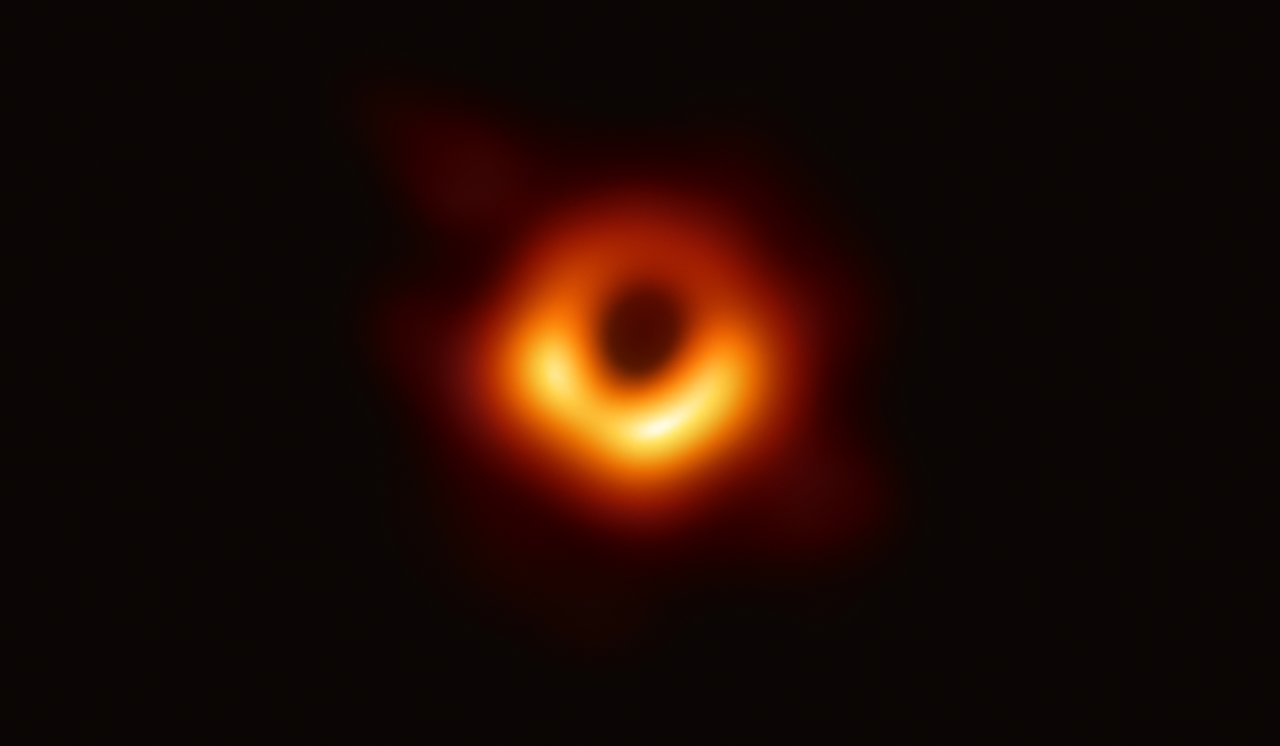
Black holes, not mathematics. The term ‘singularity’ appears to originate not from mathematics12 but from gravitational singularities, better known as black holes. A gravitational singularity is a theoretical point at the centre of a black hole at which otherwise meaningful quantities, such as density and space-time curvature, become infinite, or rather meaningless. The metaphor expresses the idea that superintelligence stands for that level of intelligence at which traditional measures become ineffective or meaningless.
3. Superintelligence
Superintelligence stands for cognitive capabilities that exceed human performance across a broad range of domains.13 It may take the form of artificial minds, enhanced humans, or combinations of the two. Superintelligence underlies all singularity scenarios, which see the quantitative measure of intelligence, at least as traditional IQ tests such as the Wechsler and the Stanford-Binet measure it, becoming meaningless for capturing the capabilities of minds orders of magnitude more intelligent than us. A graph of average intelligence in terms of IQ score may then display some form of radical discontinuity beyond the singularity. This remains true whether a particular account describes artificial superintelligence or a posthuman one. Those who foresee artificial superintelligence argue that the arrival of human-level AI — artificial general intelligence (AGI) — may soon be followed by such AI. Posthumans, who appear in accounts of a singularity from human amplification, are expected to have superhuman cognitive capabilities, including vastly greater memory and faster recall, and to be free of common obstructions to intelligent behaviour such as limited resources, disease, and age.
4. Impenetrability
When this happens, human history will have reached a kind of singularity, an intellectual transition as impenetrable as the knotted space-time at the center of a black hole, and the world will pass far beyond our understanding.
Vernor Vinge (1983), “First Word”, Omni 5(4), January 1983 (emphasis added)
In much the same way as Chimpanzees lack the cognitive wherewithal to understand what it is like to be human — the ambitions we humans have, our philosophies, the complexities of human society, or the subtleties of our relationships with one another, so we humans may lack the capacity to form a realistic intuitive understanding of what it would be like to be a radically enhanced human (a “posthuman”) and of the thoughts, concerns, aspirations, and social relations that such humans may have.
Nick Bostrom (2003), “Transhumanist Values”, in Adams (ed.), Ethical Issues for the 21st Century, Philosophy Documentation Center (emphasis added)
The event horizon of a black hole supplies a metaphor for impenetrability: a boundary in space-time, marked by the Schwarzschild radius, beyond which an outside observer cannot receive information. In singularity accounts, the proposed boundary concerns understanding. Just as other animals cannot grasp much of human reasoning and social life, we may be unable to comprehend the reasoning, aims, and societies of superintelligent beings. Impenetrability therefore goes beyond mere discontinuity: one concerns a change in the world, the other a limit on our ability to anticipate it. The rise of superintelligence thus marks a boundary of our ontological and epistemological account of our existence, and what lies beyond the singularity is anyone’s guess.
5. Inevitability
(1) There will be AI (before long, absent defeaters)
David Chalmers (2010), “The Singularity: A Philosophical Analysis”, Journal of Consciousness Studies 17(9–10), pp. 7–65, §2
(2) If there is AI, there will be AI+ (soon after, absent defeaters)
(3) If there is AI+, there will be AI++ (soon after, absent defeaters)
(4) There will be AI++ (before too long, absent defeaters)
Each technology project and contributor is unpredictable, yet the overall trajectory as quantified by basic measures of price-performance and capacity nonetheless follow remarkably predictable paths.
Ray Kurzweil (2011), “Kurzweil Responds: Don’t Underestimate the Singularity”, MIT Technology Review, 19 October 2011
What could have stopped the Industrial Revolution? The agricultural revolution? The transition to the digital age? Major transformations depend on more than one inventor or discovery. Whether the mechanism is converging routes or persistent incentives, each transformation is a rung in an ever-accelerating evolutionary process — physical, biological, and cultural. Each transition builds on earlier developments. Vinge points to several possible routes and to the competitive advantages of greater intelligence.3 The argument is that progress along one route may continue even if another is blocked. Chalmers makes the qualification explicit. In his seminal essay, AI denotes at least human-level artificial intelligence, AI+ intelligence greater than that of the most intelligent humans, and AI++ superintelligence. His “defeaters” include disasters, resource constraints, disinclination, and deliberate prevention.5 Whether these obstacles can be overcome is part of the argument for inevitability, rather than something the historical analogy settles.
6. Proximity
Proximity is the claim that the transition is close enough to concern people alive today. Forecasts differ both in date and in what they predict. Kurzweil’s The Singularity Is Near, first published in 2005, places the singularity in 2045.4 Chalmers, writing in 2010, assigned a probability above one half to human-level AI before 2100.5 These are different milestones and different timescales. Müller and Bostrom polled four groups of AI experts in 2012–13: for a 50% chance of human-level machine intelligence, the median was 2040.14 Baum and colleagues conducted a similar survey at the 2009 Conference on Artificial General Intelligence: for a 50% chance of passing the Turing test, the median was 2040.15 A survey of 2,778 AI researchers conducted in October 2023 estimated a 10% probability by 2027 and a 50% probability by 2047 that unaided machines could outperform humans in every possible task, conditional on science continuing undisrupted.16
The recent advances in large language models, and the speed at which they passed the Turing Test,17 have taken many by surprise, and led some to quote even sooner dates. In an August 2026 interview, Sam Altman anticipated an internal system that he would call AGI by the end of 2026.18 Dario Amodei argues that “powerful AI” could be one or two years away, while allowing that it could arrive considerably later; his definition describes systems exceeding leading human experts across most relevant fields.19 Neither forecast should be treated without further argument as a date for the singularity defined here.
These forecasts give reasons to take proximity seriously, but do not establish a common deadline. The step from a forecast of AI capabilities to a forecast of a singularity must itself be argued.
Conclusion
Taken together, these six characteristics clarify both the transformation envisaged and the expectations attached to it. Acceleration describes the gathering pace of change; superintelligence, the emergence of minds far beyond human capabilities; and discontinuity, the resulting break in human affairs. Impenetrability names the limits of our ability to understand what follows. Inevitability and proximity express two additional claims: that the transition cannot indefinitely be prevented, and that it may occur within the lifetimes of people alive today.
Governance requires clarity. These claims require separate arguments. Agreement about what a singularity would be need not imply agreement about whether or when it will occur. A clearer definition makes those claims easier to examine, accept, or reject. That clarity is a prerequisite for deciding how to govern increasingly capable technologies.
For a longer historical overview, see Singularity Hypotheses: An Overview.2
References
- Amnon H. Eden (2016), The Singularity Controversy, Part I: Lessons Learned and Open Questions: Conclusions from the Battle on the Legitimacy of the Debate, Sapience Technical Report STR 2016-1, conclusion (A). arXiv:1601.05977v2.
- Amnon H. Eden, Eric Steinhart, David Pearce, and James H. Moor (2012), “Singularity Hypotheses: An Overview”, in Amnon H. Eden, James H. Moor, Johnny H. Søraker, and Eric Steinhart (eds.), Singularity Hypotheses: A Scientific and Philosophical Assessment, Springer, pp. 1–12. DOI: 10.1007/978-3-642-32560-1_1. The publisher’s citation uses 2012; its online publication record gives 2013.
- Vernor Vinge (1993), “The Coming Technological Singularity: How to Survive in the Post-Human Era”, Vision-21: Interdisciplinary Science and Engineering in the Era of Cyberspace, NASA Conference Publication 10129, pp. 11–22. Author’s text.
- Ray Kurzweil (2005), The Singularity Is Near: When Humans Transcend Biology, Viking. Original publication announcement. The author reiterates the 2045 forecast in the publisher’s excerpt from The Singularity Is Nearer.
- David J. Chalmers (2010), “The Singularity: A Philosophical Analysis”, Journal of Consciousness Studies 17(9–10), pp. 7–65, §§2, 4. Author’s manuscript.
- Carl Sagan (1977), The Dragons of Eden: Speculations on the Evolution of Human Intelligence, Random House, ch. 1, “The Cosmic Calendar”.
- Eric J. Chaisson (2012), “A Singular Universe of Many Singularities: Cultural Evolution in a Cosmic Context”, in Amnon H. Eden, James H. Moor, Johnny H. Søraker, and Eric Steinhart (eds.), Singularity Hypotheses: A Scientific and Philosophical Assessment, Springer, pp. 413–440. DOI: 10.1007/978-3-642-32560-1_20. Author’s chapter.
- Stanislaw Ulam (1958), “Tribute to John von Neumann”, Bulletin of the American Mathematical Society 64(3), part 2, pp. 1–49, at p. 5.
- Robin Hanson and Eliezer Yudkowsky (2013), The Hanson-Yudkowsky AI-Foom Debate, Machine Intelligence Research Institute.
- Ben Goertzel (24 September 2014), “Semihard Takeoff”, The Multiverse According to Ben.
- Alvin Toffler (1980), The Third Wave, William Morrow.
- Yehuda Hirshfeld (5 February 2011), “A Note on Mathematical Singularity and Technological Singularity”.
- Nick Bostrom (2014), Superintelligence: Paths, Dangers, Strategies, Oxford University Press, chapter 2.
- Vincent C. Müller and Nick Bostrom (2016), “Future Progress in Artificial Intelligence: A Survey of Expert Opinion”, in Vincent C. Müller (ed.), Fundamental Issues of Artificial Intelligence, Springer, pp. 555–572. arXiv:2508.11681.
- Seth D. Baum, Ben Goertzel, and Ted G. Goertzel (2011), “How long until human-level AI? Results from an expert assessment”, Technological Forecasting and Social Change 78(1), pp. 185–195. Pre-print.
- Katja Grace, Julia Fabienne Sandkühler, Harlan Stewart, Benjamin Weinstein-Raun, Stephen Thomas, Zach Stein-Perlman, John Salvatier, Jan Brauner, and Richard C. Korzekwa (2025), “Thousands of AI Authors on the Future of AI”, Journal of Artificial Intelligence Research 84. Survey conducted October 2023; an initial preprint appeared in 2024. DOI: 10.1613/jair.1.19087.
- Cameron R. Jones and Benjamin K. Bergen (2025), “Large Language Models Pass the Turing Test”. arXiv:2503.23674.
- Alex Heath (26 August 2026), “Inside OpenAI’s Reboot”, TIME, interview with Sam Altman. Article.
- Dario Amodei (2026), “The Adolescence of Technology”, section defining powerful AI and discussing its possible arrival. Author’s essay.
Dr Amnon H. Eden is a computer scientist, the Principal Scientist at the Sapience.org thinktank, and founder of Moneta Sapiens Ltd.
Comments are welcome.
–» dysclaimer «–